Your Zodiac Animal Just Exposed Your Biggest Weakness
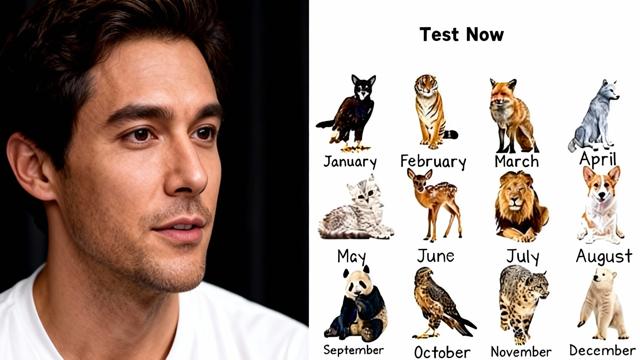
Every zodiac animal hides one adorable soft spot, the very thing that makes you gloriously, lovably human. Yours is not really a flaw so much as a fingerprint, unmistakably you.
Answer a few quick questions and we will name the tender weakness your sign wears best. Keep it light: this is just for fun, not a horoscope and definitely not a personality diagnosis. Whatever your soft spot turns out to be, we think you should wear it proudly.
Read every possible outcome for this quiz and what each one means →
Twelve branches came first, the animals arrived later
The Chinese cycle did not begin as a menagerie. The twelve earthly branches were calendrical markers, paired with ten heavenly stems to make a sixty-year cycle still used for dating. Animals attached afterwards, a mnemonic and a popular face for a bureaucratic system: bamboo daybooks excavated at Shuihudi and buried around 217 BCE already pair branches with creatures, and by the first century CE Wang Chong's Lunheng treats them as ordinary knowledge. The great race, with the rat riding the ox and leaping off at the line, is folklore added much later to explain an order already fixed. The cast changes with geography, too. Vietnam runs a cat where China runs a rabbit, and a water buffalo for the ox; Japan's twelfth animal is the wild boar rather than the pig.
Every strength issued with its shadow attached
Traditional character sketches are built in pairs, and this is the part worth borrowing. Each animal carries an element and a yin or yang polarity, and a sign is rarely a list of virtues. It is a virtue described with the excess it turns into. The Ox's steadiness hardens into stubbornness. The Rat's quick wit becomes restlessness that cannot sit through an evening. The Horse's independence curdles into being impossible to depend on. The clash pairings used in old matchmaking work the same way, setting two temperaments against each other rather than ranking them. The structure sits close to the Greek notion of a mean between two faults, and it is kinder than most personality language: your soft spot is the far end of the thing you are good at rather than a separate defect bolted on.
A superstition you can see in the birth statistics
Zodiac thinking is not purely decorative; it moves real numbers. The year 1966 was hinoeuma, the Fire Horse, which comes round every sixty years and is said to produce women fierce enough to burn through their husbands. Japanese births fell by roughly a quarter that year and rebounded at once, one of the clearest demographic footprints any folk belief has left. The opposite happens in dragon years, when births rise across Chinese communities, and economists still argue about whether those children do better because more was expected of them.
As for having a weakness named on your behalf, mild self-criticism is unusually easy to accept. Most people happily endorse a flaw that is flattering in outline, caring too much or holding on too long, which is why a sign-based soft spot lands warmly instead of stinging. Read it as a prompt rather than a verdict.