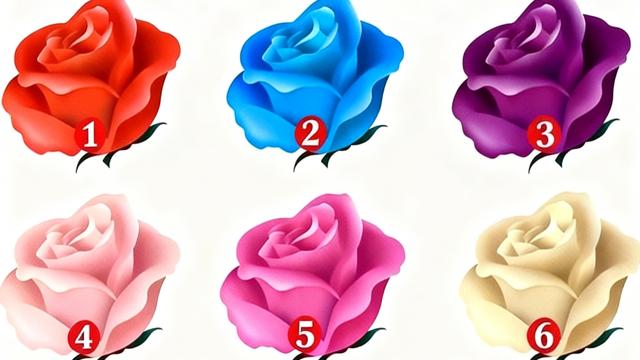
What Color Is Your Real Personality Underneath?
Forget the color you'd claim on a first date. Underneath the version you show the world, your actual personality runs one dominant shade — the one that colors how you love, argue, dream, and light up a room without meaning to.
Seven quick questions will pull that true hue to the surface, no matter how well you've learned to hide it. Answer with your gut, not your reputation. By the end you'll know the exact color your soul has been quietly painting everything, and you'll wonder how you ever missed it.
Read every possible outcome for this quiz and what each one means →
Sorting people by colour is a small industry
Colour-coded personality systems have been sold for decades. Don Lowry built True Colors in 1978 on David Keirsey's temperament groupings and handed out orange, gold, green and blue. Insights Discovery markets a four-colour wheel to corporate training rooms. Earlier still, the Swiss psychotherapist Max Lüscher published a test in the late 1940s that asked people to rank eight coloured cards and claimed to read emotional state from the order they chose.
The Lüscher cards travelled the world and were studied seriously enough for reviewers to reach the verdict such tools usually attract: the scores did not agree with other measures of the same thing, and the interpretations were elastic enough to suit almost anybody. The colour schemes sold today are gentler and largely harmless, but their appeal has always rested on how memorable a colour is rather than on evidence that hues map onto character.
What the research on colour actually shows
There is real science here. It is simply narrower than the marketing. Andrew Elliot and Markus Maier's colour-in-context theory argues that no colour carries a fixed psychological meaning; it takes its meaning from where you meet it. Red on a marked exam paper and red on a valentine do very different work. Experiments have found small effects of colour on attention, on judgements of attractiveness and on performance under pressure, and several of the headline findings have proved awkward to reproduce.
Colour and emotion do travel together in broad strokes. Multinational surveys covering dozens of countries find fairly consistent pairings, yellow with joy and black with grief, though the strength and the finer detail shift with language and climate. Those are associations living in the mind of whoever is looking. They are not properties of the person a colour gets pinned to.
Reading your shade without over-trusting it
The mechanism below is plain enough to describe in one sentence: seven questions, each answer pointing at one of five colours, and the colour picked most often wins. That makes it a preference sorter rather than an assessment, and it will happily give you a different shade on a different afternoon if your mood has moved.
Even so, there is a reason the format persists. A colour is a compact way of saying something about yourself that a paragraph would fumble. If the result feels wrong, notice which colour you were secretly hoping for. That preference is usually the more interesting piece of information.