How Strong Is Your Sixth Sense, Really?
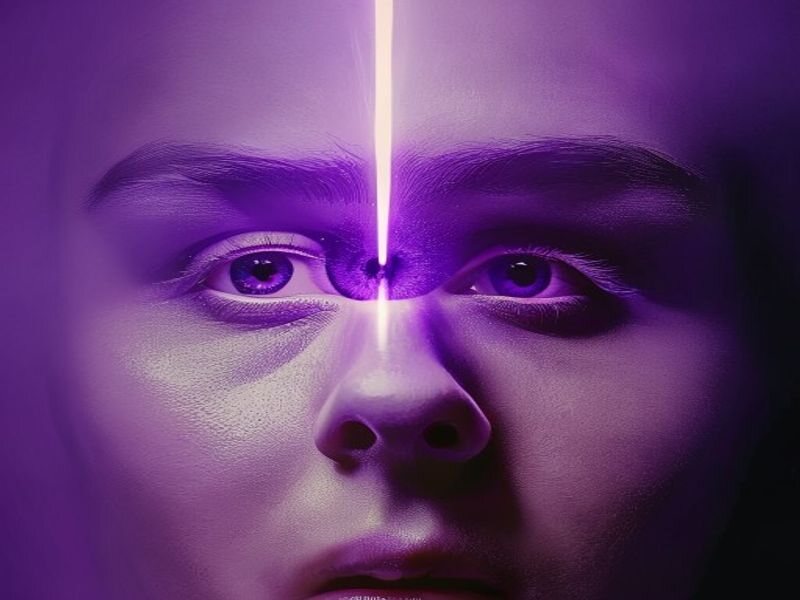
Ever known who was calling before you looked? Felt a bad vibe that turned out dead right? That little tingle might be intuition, coincidence, or a full-blown sixth sense quietly running the show.
These seven questions add up your psychic points and hand you a verdict, from proudly logical to certified oracle. It's all in good fun, so don't go quitting your day job over the results. Answer with your gut, obviously, and let's see how spooky you really are.
Read every possible outcome for this quiz and what each one means →
The laboratory years
Joseph Banks Rhine set up a parapsychology laboratory at Duke University in the 1930s, popularised extrasensory perception as a research term, and tested it using Zener cards, a deck of five repeated symbols guessed under controlled conditions. Later work moved to the ganzfeld setup, where a receiver sits under red light with halved ping-pong balls taped over the eyes while a sender concentrates on a target image. The critic Ray Hyman and the researcher Charles Honorton argued over the statistics through the 1980s and in 1986 published a joint communique agreeing on tighter protocols, one of the more civil disputes the field has produced.
There was also official money involved for a while. From the early 1970s American defence and intelligence agencies funded remote viewing research, work eventually gathered under the codename Stargate. An external review in 1995 by the statistician Jessica Utts and the same Ray Hyman reached opposite conclusions about whether anything real had been detected, and the programme was closed on the grounds that it had never produced anything useful.
The paper that broke something else instead
In 2011 the social psychologist Daryl Bem published Feeling the Future in a leading journal, reporting that students seemed to respond to stimuli before those stimuli appeared. The findings did not replicate. The lasting consequence landed elsewhere: because Bem had used ordinary, widely accepted methods, the episode helped convince psychologists that those methods were far too loose, and it accelerated the shift toward preregistration and routine replication that reshaped the discipline.
What a gut feeling actually is
Plenty of accurate hunches need nothing supernatural. Gary Klein's studies of fireground commanders found experts recognising a situation within seconds and only afterwards constructing a reason for the call. People absorb statistical regularities without noticing, a capacity psychologists label implicit learning, and read faces and rooms much faster than deliberate thought operates. Add interoception, the perception of your own internal state, and the phrase something felt wrong turns into a report on real information you cannot yet put into words.
Nobody counts the misses
Memory keeps the hit and quietly discards the hundred times you thought of someone who never rang. That asymmetry, rather than any hidden faculty, accounts for most personal evidence of premonition. What the questions below measure is how much you trust your instincts and how you narrate them afterwards, which is a genuinely interesting thing to learn about yourself. They do not measure anything paranormal, and no set of questions could.