Touch Your Birthstone — What Life Is Coming for You?
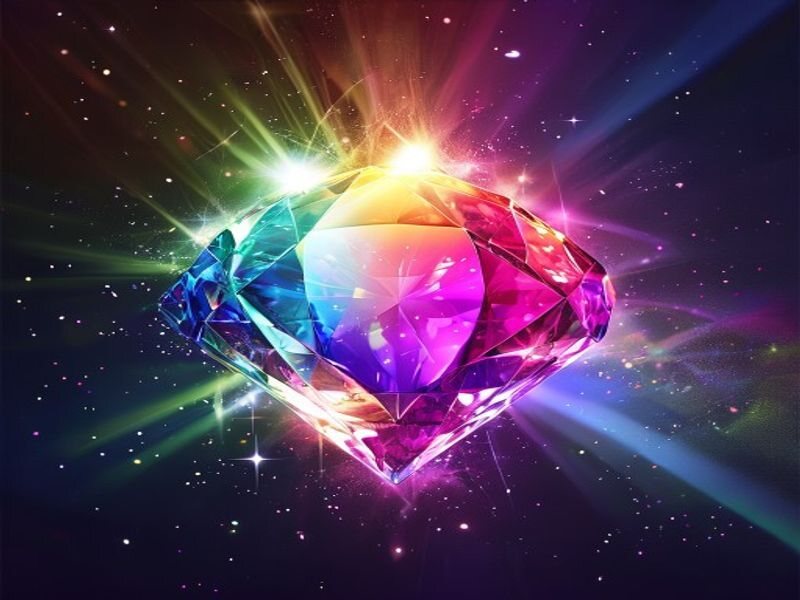
Deep inside every birthstone, the old jewelers believed, a single life was sleeping — not the one behind you, but the one still rolling toward you. The right name, they said, could wake that stone and make it show its colors.
Type your first name and we'll read the life your birthstone has been quietly saving for you. Consider it a wink from the universe rather than a guarantee — yet somehow these little previews have a habit of landing closer to the truth than they should.
Read every possible outcome for this quiz and what each one means →
Twelve stones on a priest's chest
Exodus 28 describes the breastplate of the Israelite High Priest, set with twelve engraved stones, one for each tribe. The first-century historian Josephus and, later, Jerome connected those twelve to the twelve months and the twelve signs of the zodiac. That link is the seed of the whole birthstone idea. The translations are shaky: several Hebrew gem names are uncertain, and the stone rendered as sapphire in older Bibles was almost certainly lapis lazuli, since true sapphire was barely worked in the region at that date.
Owning one stone for your own month, rather than a set of all twelve, seems to be a much later European habit, often credited to gem traders working in eighteenth-century Poland.
A list written by a trade association
The familiar Western chart is not ancient. In 1912 the National Association of Jewelers, meeting in Kansas, agreed a standard month-by-month list largely so that retailers would stop contradicting one another. Alexandrite, citrine and tourmaline were added in 1952. Tanzanite joined December in 2002 and spinel was added to August in 2016. Each revision tracked commercial supply at least as closely as symbolism.
Britain went its own way. The National Association of Goldsmiths issued a separate list in 1937, and it still disagrees with the American one in several months, which is why a jeweller in Leeds and a jeweller in Denver may hand you different stones for the same birthday.
Other traditions, other stones
Vedic gem lore runs on different logic. The navaratna, or nine gems, correspond to the navagraha, the nine celestial influences, and a stone is prescribed from an individual birth chart rather than a calendar month. Ruby answers to the Sun, pearl to the Moon, blue sapphire to Saturn. Tibetan and Ayurvedic lists differ again, and older European sources disagree among themselves. Anyone who has been assigned two different birthstones has usually just met two different traditions.
Reading a rock honestly
Minerals have no idea when you were born, and no gem chart forecasts anything. The pleasure on offer is older and simpler than prophecy: a small bright object with a colour attached to your name, something to turn over in the palm while you think. Jewellery has carried meaning for as long as people have made it. A stone that prompts you to consider the year ahead has done its job without needing to be right about it.
How this one works: the name you type is turned into a number, and that number picks one of the outcomes below. It is a party trick rather than a reading — the fun is in which one you land on, not in it being true.