What's Your Secret Elf Name? Type to Unwrap It
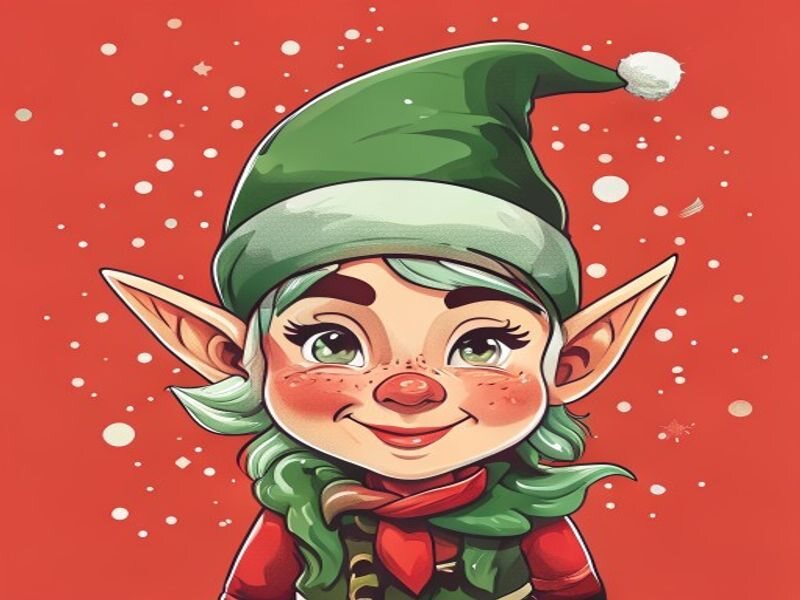
Ever wonder what Santa's crew would call you if you clocked in for a shift? Every human has a hidden elf name waiting on the workshop roster — tucked between the tinsel and the to-do lists, glittering, ready for the right person to claim it.
Type your first name and we'll dig through the naughty-and-nice files to find yours. It's silly, it's festive, and it's yours. Warning: you may never see yourself as fully human again.
Read every possible outcome for this quiz and what each one means →
The álfar came first, and they were not cute
The oldest elves in the written record are Norse. The álfar run through the Poetic Edda and the Prose Edda, often paired with the gods in the phrase gods and elves, which tells you how much standing they had. Snorri Sturluson, writing in thirteenth century Iceland, split them into light elves, fairer than the sun, and dark elves living below ground, though scholars argue over how much of that Snorri tidied up himself.
They were powers to negotiate with, not helpers. A household sacrifice called the álfablót turns up in medieval Norse verse, held in autumn, and one poem records a traveller turned away from farm after farm because the rite was underway. Nobody in that world would have handed an elf a clipboard.
Iceland's hidden people
Iceland kept the tradition under another name, the huldufólk, the hidden people, understood to live inside particular rocks and hillsides. The claim that most Icelanders believe in them overstates the case; a well known 1970s survey by the psychologist Erlendur Haraldsson found a majority unwilling to rule the possibility out, a more interesting answer.
In practice it shows up as a reluctance to be rude to a landscape. Road schemes have been altered after objections about particular boulders, most visibly during a 2013 dispute over a route on the Álftanes peninsula.
How elves shrank and took up toymaking
The workshop elf is a young invention assembled from Scandinavian farm spirits. The Swedish tomte and the Danish nisse were small bearded guardians attached to a farmstead, protective if respected and vindictive if not, owed a bowl of midwinter porridge with butter on top. The stories about farmers who forgot the butter are not gentle.
The American assembly happened in the nineteenth century. Clement Clarke Moore's 1823 poem calls St Nicholas himself a right jolly old elf, illustrated magazines of the 1870s put helpers in his workshop, and the staffing was settled. Iceland went another way, with thirteen Yule Lads arriving one a night, each with a specialism such as door slamming or skyr stealing, plus their alarming mother Grýla.
Where the silly names come from
Nordic naming is compound by nature, which is why the joke works: a bright first name plus a two part surname welded from a texture and an object. Frost and whisker, tinsel and gear, snow and dapple. The comedy is in gluing something delicate to something ridiculous.
Your result is wordplay, not a translation, and is best read aloud to somebody who will laugh.
How this one works: the name you type is turned into a number, and that number picks one of the outcomes below. It is a party trick rather than a reading — the fun is in which one you land on, not in it being true.