What Mythical Creature Are You Tonight?
Midnight does something strange to a person. The polite daytime version of you clocks out, and whatever's been pacing around in your chest finally gets to stretch its wings, or its tentacles, or its suspiciously sharp teeth.
Answer seven quick questions with your gut, not your manners, and we'll name the mythical creature you turn into once the moon takes over. No wrong answers here, only gloriously dramatic ones. Pick fast and let the beast decide.
Read every possible outcome for this quiz and what each one means →
Two dragons that were never the same animal
English collapses two unrelated traditions into one word. The European dragon of Beowulf and the Norse Fáfnir legend is a solitary hoarder, a fire hazard with a treasure problem, whose job in the story is to be killed by somebody with a sword and a reputation to build.
The Chinese lóng is not that creature. It is long bodied and largely wingless, tied to rivers, rainfall and imperial authority, and it arrives in stories as a bringer of water that farmers petitioned during droughts. When translators reached for the nearest English word they flattened a benevolent weather spirit into a monster.
The unicorn started as a bad description of a real animal
Around 400 BC the Greek physician Ctesias, at the Persian court, recorded secondhand reports of a one horned wild ass in India. He had never seen it. Scholars think he blended travellers' accounts of the Indian rhinoceros with something antelope shaped, and the composite lodged in European natural history for two thousand years.
Two accidents cemented it. Greek translators of the Hebrew scriptures rendered a word for some powerful horned beast as monokeros, which reached English Bibles as unicorn. And from the medieval period Scandinavian traders sold narwhal tusks into Europe as unicorn horn, believed to neutralise poison. At least one royal throne was built from them.
The kraken was promoted to fact
Most creatures here stayed imaginary. One did not. Norwegian sailors' accounts of an island sized sea beast were written up in the 1750s by Bishop Erik Pontoppidan, and for a century the kraken was a byword for a tall tale. Then giant squid carcasses began washing ashore, the genus Architeuthis was described from real tissue, and in 2004 Japanese researchers photographed a living one off the Ogasawara Islands.
It is not island sized. At eight metres or more it is still quite enough to explain a frightened sailor.
Phoenixes, fae and the reason they persist
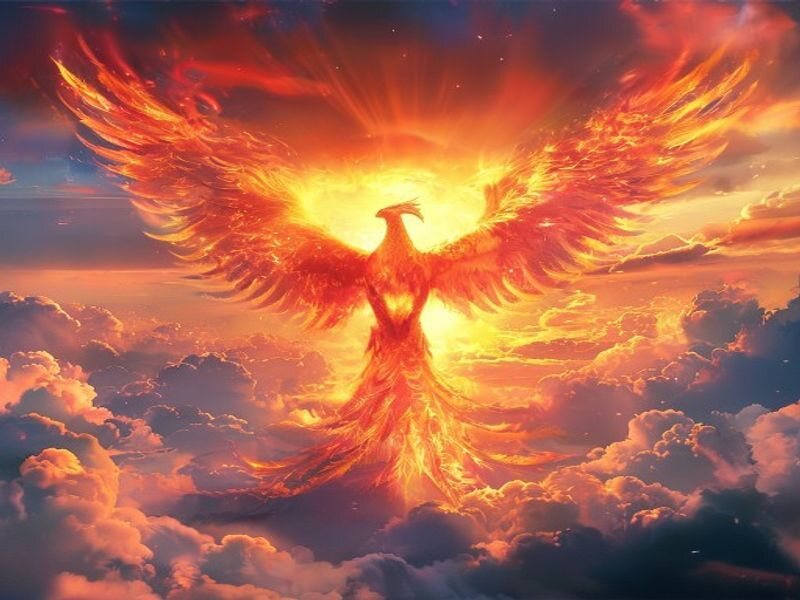
Herodotus described the phoenix in the fifth century BC, repeating what priests at Heliopolis told him; behind his account sits the Egyptian benu bird, tied to the sun and to renewal. The fae are closer to home: the aos sí of Irish tradition lived under the mounds, and the custom of leaving their ringforts and thorn trees undisturbed was strong enough that a 1999 road scheme in County Clare was rerouted around a fairy bush.
Which creature you get is decided by playful questions, not folklore. The stories underneath are ancient, and better than the quiz.